Saturday, November 26, 2011
Tamales and Chuchitos
I was looking for the website of our favorite Antigua bakery, La Reposteria when I came across this article which mentions a woman who sells tamales and chuchitos on Saturday night. So, guess what I did tonight?
Not familiar with tamales or chuchitos? I wasn't too familiar with them either so that is why I read the article linked above just as I know you did. For the insatiably curious, you can also read about them at Wikipedia which also has some information specifically about Guatemalan tamales:
In Guatemala, a variety of tamal is called "Tamal Colorado," which has a chicken or pork filling, a tomato based sauce recado, (hence the "colorado," which means red coloured). It may also contain olives, red bell pepper, prunes or raisins, capers, and almonds.
Chuchitos are like tamales but the masa is firmer. The masa in the tamales was very soft - more like very soft mashed potatoes. The chuchito was firm and could be picked up to be eaten. The tamales are wrapped in banana leaves and the chuchitos in corn husks.
So, with that build up, I give you pictures. Ok, I will warn you, the pictures aren't that great (but you are used to that by now, right?) and they don't make the tamales look particularly appetizing but trust me, they were all delicious.
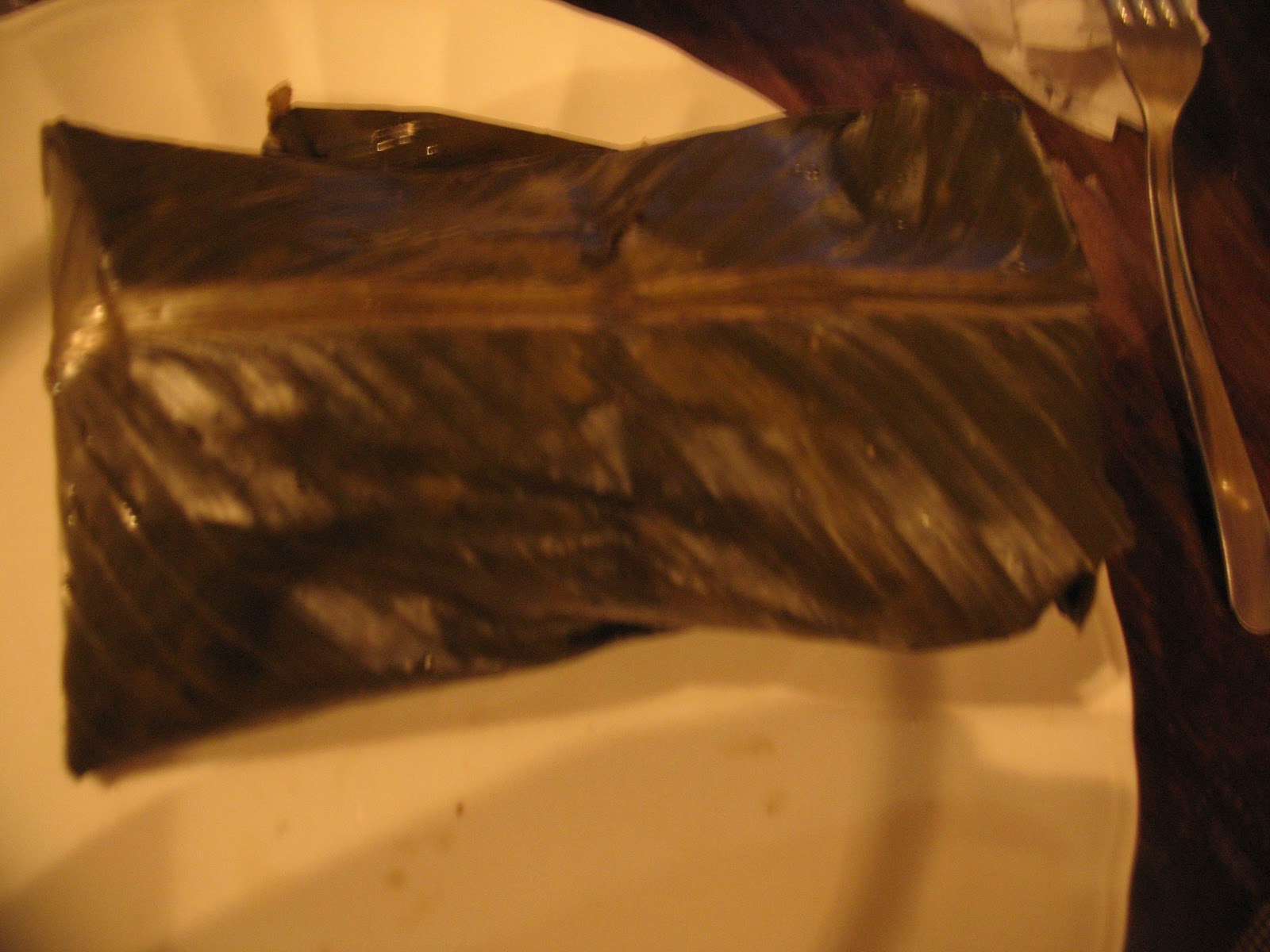
I had one pork tamale and one chicken one. They were both delicious and had meat, sauce and an olive in them. The pork was tender and incredibly flavorful. The chicken ones were flavorful and tender with the meat falling off the bone...which means that the pieces of chicken inside were still on the bone when the tamale was cooked which kind of made it a pain to eat. The chuchito had pork and sauce and chapin inside and was also delicious. I ate them while streaming the Florida - Florida State game on to our laptop thanks to the amazing things you can find on the internet.
Friday, November 25, 2011
School Days
There are dozens of language schools in Antigua and after much research and deliberation, we decided to go with the best. And of course the best (cognitive dissonance notwithstanding) is Tecun Uman (please note the incorporation of shadow in the following photo - with our learned readership I know I am being blatantly obvious by indicating the homage to, yet modern interpretation of, chiaroscuro and the Italian Renaissance):
and this is what our classroom looks like:
Well, I started there and then was moved (due to my exceptional behavior) to a more suitable location:
which is great except this is the view I have to stare at all morning:
and if I shift a little, I get to stare at this:
and it is hard learning how much Spanish you don't know when you are watching Fuego erupt. Sigh.
Here are a couple more pictures of where we study:
And now, some words of wisdom for you to ponder:
Spanish lessons are really paying off so far!
Thursday, November 24, 2011
Gobble Gobble
Yesterday's post showed the town of San Antonio and provided an excellent explanation about the weaving that is done there. What yesterday's excellent explanation failed to mention is the technique used to make these beautiful textiles. First you need to know that everything is done by hand. The cloth for the women's skirts is done on a treadle loom. Sure, hours of fun and entertainment, right? But the really nice fabrics like the women's huipils are done on a backstrap loom. Now the fun really begins because you get to kneel while you weave! Yep, hours and hours on your knees. Our good friends at Wikipedia have a photo of a woman weaving this way which is good because your slacker hosts forgot to take one. To give you an idea of how much time you get to spend kneeling, a huipil is made up of two woven pieces. Each piece takes 3 months to make. Just typing that makes me knees ache.
Dear Reader, please remember that each pueblo has a different design/style of huipil. For example, this huipil is from Santa Catarina Palopó on the shores of Lake Atitlán.
A beautiful design and the blues are just amazing. However, we are talking about San Antonio Aguas Calientes and fortunately, your slacker hosts did take photos of the weaving there (and some of them are even almost in focus!) so you can see the results:
Wednesday, November 23, 2011
Another town,
Another place. (editor's note: the first song in the link is correct, the title of the song, as titled by the person posting the clip, is incorrect. Don't believe me? Buy this CD and read the liner notes.)
Class again in the morning. Stopped by favorite bakery for my daily dose of chicken pastry. I would call it an empanada except it is a pastry crust and they don't call it an empanada here either. So I will aquiesce to the local terminology and call it (will have to ask again tomorrow because I forgot the word - but I can still point and say 'pollo' so no worries on me going hungry in the morning).
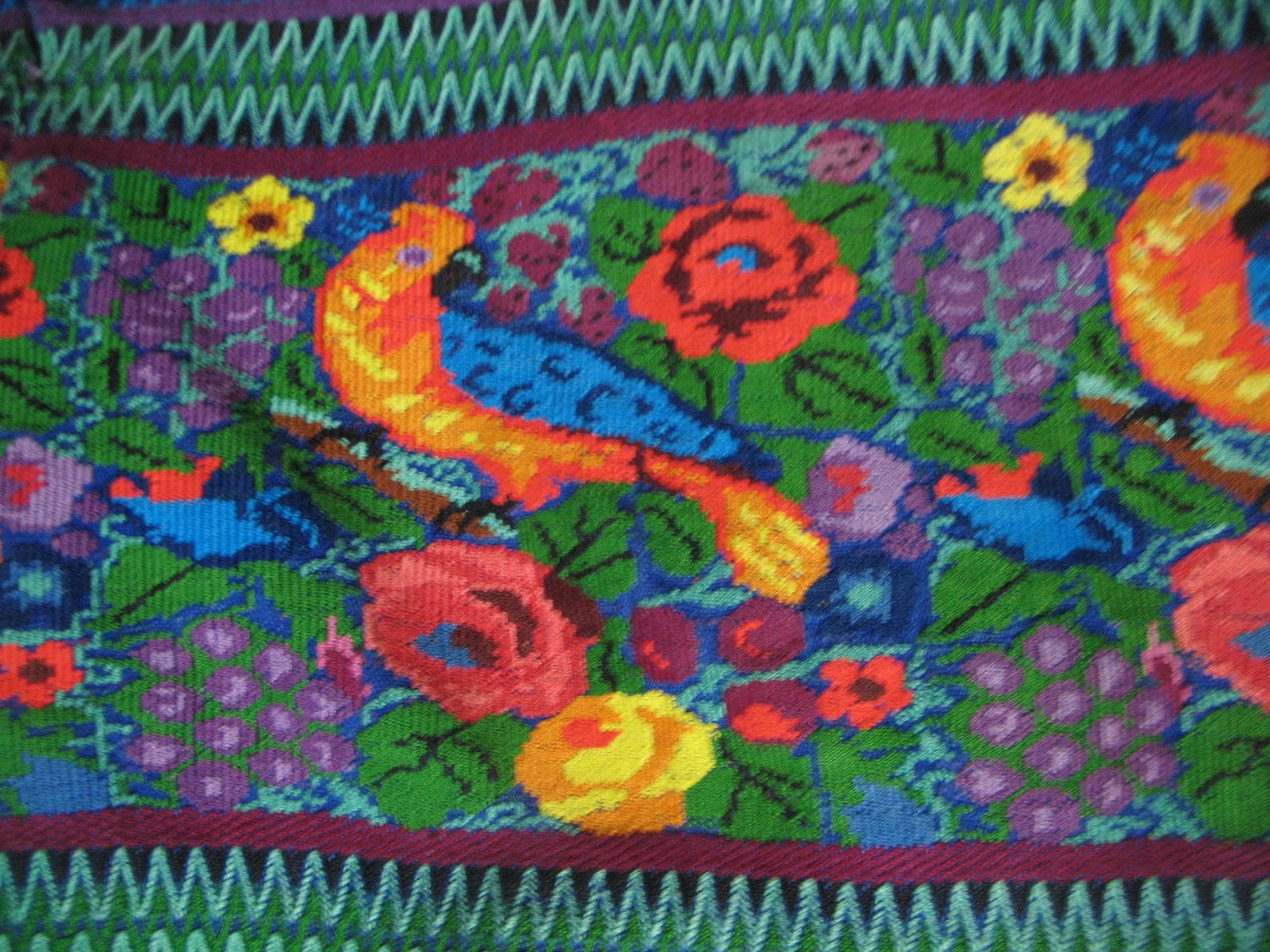
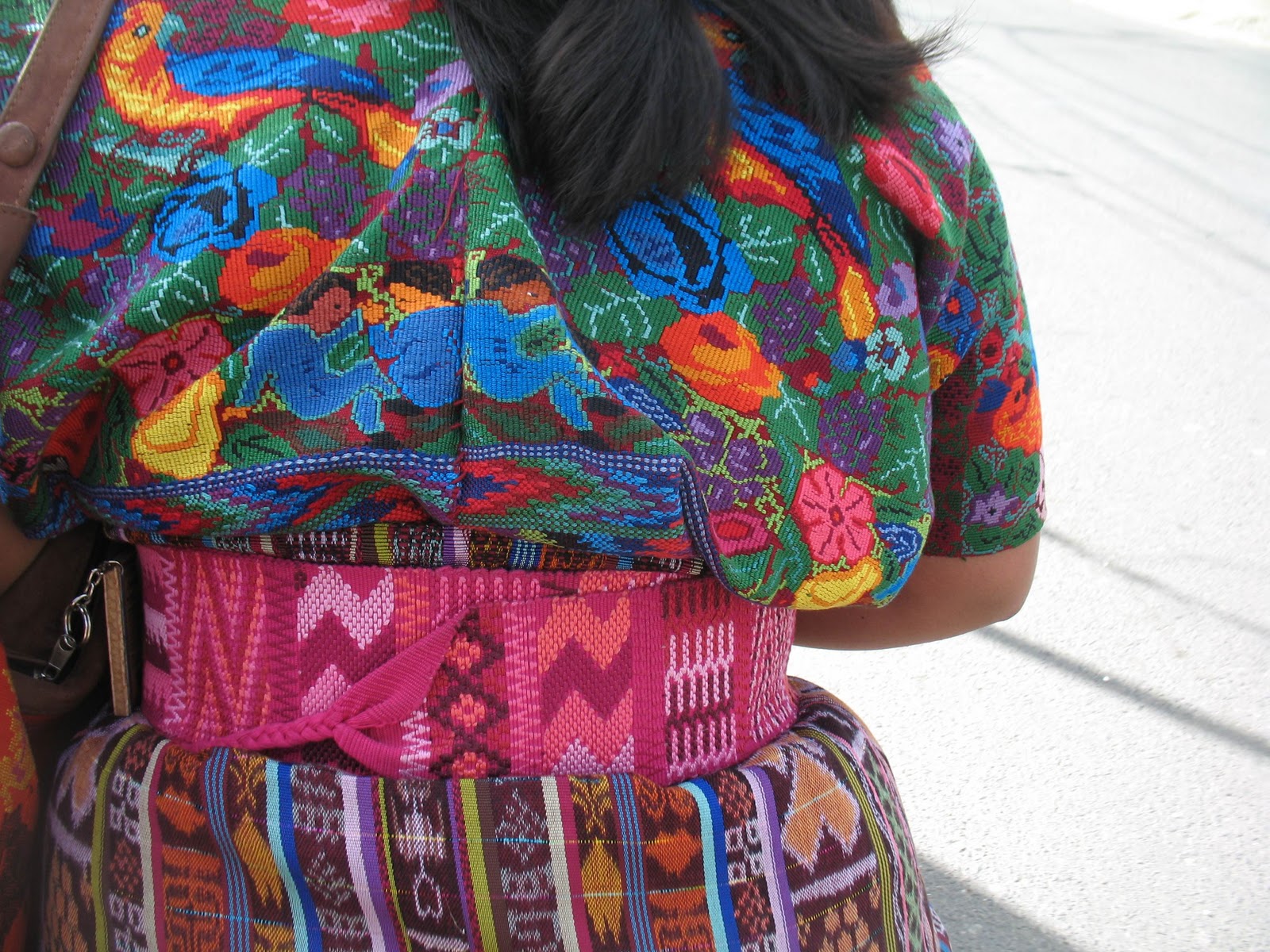
After class, more chicken from our favorite chicken place (access previous post for a photo) and then took a bus to San Antonio Aguas Calientes. San Antonio is famous for the quality of the weaving. Each village/pueblo has a traditional style of dress which is most often represented by the blouses (huipils) of the women. The huipils of San Antonio are woven so that the design is on both sides of the fabric. I know so little (an amount closely approaching nothing) that I can't begin to explain how this works and why the process of weaving doesn't produce the design on the huipils of every other pueblo. All I can tell you is that we have seen enough huipils from different pueblos to know that they definitely do something different in San Antonio. Also, the traditional design of San Antonio incorporates parrots and angels while the designs of the huipils of most other pubelos are more geometric in nature. It is amazing to see all the different designs from the different parts of Guatemala and it is pretty cool that the women have maintained this tradition for so long. Sure, there have been outside influences over the years (hence, the inclusion of angels which I don't think is a traditional Mayan theme).
So here are some pictures of the trip to San Antonio. We'll start with pictures taken from the bus of the land and towns in between Antigua and San Antonio:
Look! We arrived in San Antonio:
Yes, it is hard to compare favorably to Antigua. But let's go to the central square:
Ooooh, there is a rodeo in Chimaltenango on Saturday...may have to check that out!
Back in Antigua:
And a great day was had by all.
Subscribe to:
Posts (Atom)